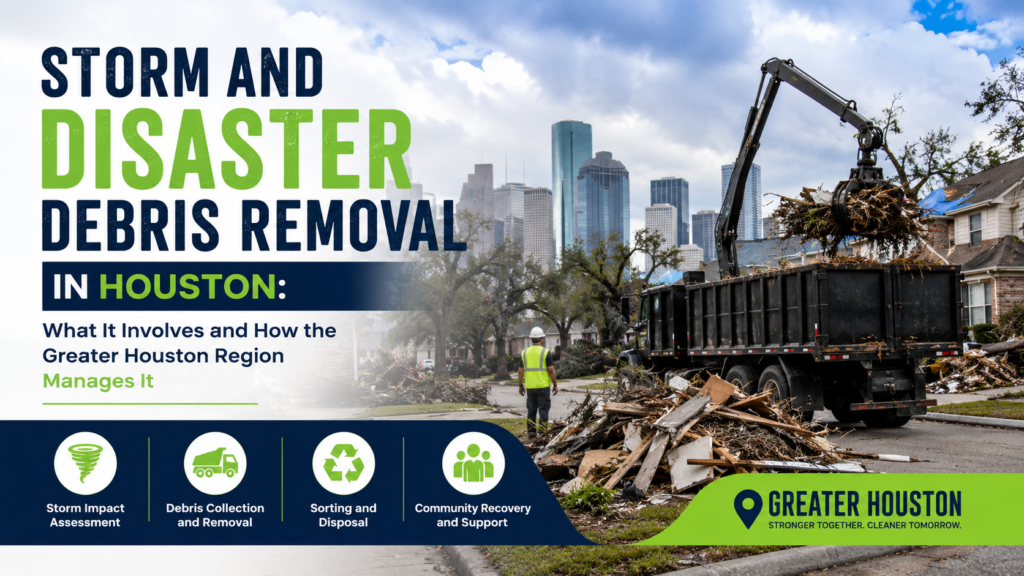
Houston and the greater Harris County area exist at a unique convergence of meteorological, geographical, and demographic forces that make the region particularly vulnerable to major storm events. The flat coastal plain geography of the Houston metropolitan area provides no terrain barriers to incoming Gulf of Mexico weather systems. The city’s position at the intersection of multiple major river watersheds the Buffalo Bayou, Brays Bayou, White Oak Bayou, and numerous others creates a drainage system that, under the extreme precipitation of major hurricane and tropical Storm and Disaster Debris Removal Houston events, can receive far more water than it can convey to the Gulf. Houston’s warm Gulf waters enhance the intensity of storms that approach from the south. And the region’s enormous population the fourth-largest metropolitan area in the United States means that when major events occur, the volume of debris generated is proportionally immense.
The Scale of Storm Debris in the Houston Region
Hurricane Harvey’s 2017 impact on the Houston region established new benchmarks for urban storm debris in U.S. history. The storm generated an estimated 8 million cubic yards of debris from Harris County alone approximately 60 to 90 times the volume that would fill Houston’s NRG Stadium. The City of Houston estimated the cost to clean up debris at approximately $200 million for the city proper, with the regional total many times larger. By October 2017 just over a month after Harvey made landfall jurisdictions across the affected area had collected approximately 7.9 million cubic yards of storm debris using a combination of contracted labor, local government crews, and mutual aid workers.
Hurricane Beryl in July 2024 provided a more recent reminder of the region’s ongoing storm debris challenge. The storm’s debris volumes in some areas reportedly exceeded what Harvey generated in specific jurisdictions, and the combination of vegetative debris (fallen trees and limbs), construction debris (fencing, roofing, damaged building materials), appliance debris, and electronic waste created the same multi-category sorting challenge that characterizes every significant Houston storm event.
These events are not outliers they are reminders of the recurring nature of storm debris in the Houston region. The Gulf of Mexico hurricane season runs from June through November, and Houston has experienced significant storm events in most recent years. Property owners and businesses in the Houston region should understand both the public systems that manage storm debris during declared disasters and the private services that address debris needs that fall outside public program scope.
The Five Categories of Houston Storm Debris
Effective storm debris removal in Houston requires understanding that different types of debris have different handling requirements, disposal pathways, and collection timelines. The guidelines established by Harris County and the City of Houston for storm debris separation reflect these differences.
Vegetative debris fallen trees, tree limbs, branches, palm fronds, and organic plant material is typically the highest-volume category after tropical weather events in the Houston area. This material is collected separately from other debris types and is typically processed through grinding, chipping, or burning (in rural areas) to produce mulch or biomass material. Vegetative debris must not be mixed with construction debris or other waste mixed loads are more difficult and expensive to process.
Construction and demolition debris fencing, decking, lumber, roofing material, drywall, siding, broken concrete, and general building material damaged or destroyed by the storm is the second major category. This material includes the structural components of homes and buildings that have been damaged beyond repair or that have been partially or fully removed during storm recovery. Construction debris from storm recovery has the same recycling pathways as planned construction debris concrete to RCA, metal to scrap, wood to chipping or disposal but the volumes generated during major events can overwhelm available processing capacity.
Large appliances refrigerators, freezers, washers, dryers, water heaters, and HVAC equipment are a distinct debris category because they may contain regulated refrigerants (in older units containing R-12 or HCFC-22) that must be recovered under federal EPA Section 608 requirements before the appliances can be crushed or shredded. Collection programs for appliances during major Houston storm events coordinate refrigerant recovery as part of the collection process.
Electronics televisions, computers, phones, and other electronic devices are a regulated waste category under Texas law. Electronic waste cannot go to general solid waste disposal and must be directed to e-waste recycling pathways. During major storm events, the volume of electronics damaged by flooding creates a significant e-waste management challenge.
Household hazardous waste paint, pesticides, motor oil, batteries, solvents, and similar materials is the smallest-volume but highest-consequence category. These materials can contaminate collection equipment, disposal facilities, and the environment if they are mixed with general debris. During Harvey and subsequent Houston storm events, TCEQ and Harris County established specific household hazardous waste collection points to capture these materials separately from general debris.
The FEMA Disaster Debris Removal Framework
For federally declared disasters which Harvey was, and which subsequent significant Texas storm events have been FEMA’s Public Assistance program provides reimbursement to state and local governments for eligible debris removal activities. It is important to understand what this program does and does not do. FEMA does not directly perform debris removal, hire contractors, or manage dump sites or transfer stations. FEMA reimburses state and local governments the City of Houston, Harris County, and other jurisdictions for their documented, eligible storm debris removal expenditures.
For individual property owners, the FEMA Public Assistance framework means that debris removal from public rights-of-way curbside collection of debris placed at the street edge is typically funded and organized by the local government after a major declared disaster. Property owners in Harris County and the City of Houston can access this service by placing sorted debris curbside within two to three feet of the street edge in the county right-of-way and during declared disasters submitting debris removal request forms to the appropriate county. Harris and Montgomery Counties have maintained online debris removal request forms for use during declared disaster events.
Critically, FEMA-funded public curbside collection does not address debris removal from inside private property. City crews during the Harvey response, for example, could not enter homes, backyards, or storage areas they collected only debris placed in the public right-of-way. For debris inside the property, for debris removal before organized public collection begins (which can take days to weeks after a major event), and for materials that fall outside the categories accepted by public programs, private debris removal services are the necessary resource.
Private Disaster Debris Removal Services in Houston
Private storm and disaster debris removal services in Houston fill the gaps between what public programs provide and what property owners actually need. These gaps include debris inside the property that public crews cannot access, debris removal in the immediate post-storm period before organized public collection is operational, debris categories not accepted by public programs, and property owners who need faster or more comprehensive service than curbside collection provides.
Private debris removal services that serve the Houston market during storm recovery events need specific capabilities that distinguish them from standard clean out or junk removal services. High-volume capacity the ability to mobilize large crews and equipment quickly in response to surge demand is essential. Familiarity with Houston’s post-disaster debris categories and disposal requirements allows efficient sorting and routing of different material types. Experience working in the physically challenging and potentially hazardous environment of storm-damaged properties where structural damage, contaminated floodwater residue, and unstable conditions may be present is important for crew safety and effective operations.
Common Questions About Storm Debris Removal in Houston
What should I put at the curb after a Houston storm event, and in what order? Harris County and the City of Houston ask that storm debris be sorted into five categories and placed separately: vegetative debris, construction debris, appliances, electronics, and household hazardous waste. Each category should be in a separate pile at the curbside. Do not place debris in the road or in drainage ditches, which can impede traffic and affect drainage capacity during subsequent rain events.
How do I know if my Houston area qualifies for FEMA debris removal? Following a major storm event, watch for communications from Harris County, the City of Houston, or your municipality about the declaration of a federal disaster and the initiation of debris removal programs. Required debris removal request forms will be made available online and at county service centers. FEMA.gov and the City of Houston’s emergency management website (readyhoustontx.gov) provide current information during active disaster events.
What happens to debris from homes that were flooded and then demolished in Houston? Demolition debris from Harvey-damaged homes and other storm-demolished structures is construction and demolition debris that follows the standard C&D disposal pathways concrete to recycled aggregate, metal to scrap, wood and mixed material to permitted disposal facilities. During major events, temporary debris management sites are sometimes established in the Houston region to provide intermediate processing and staging capacity that reduces pressure on permanent disposal facilities.